 Visit
Visit  Follow
Market Insight for May 1

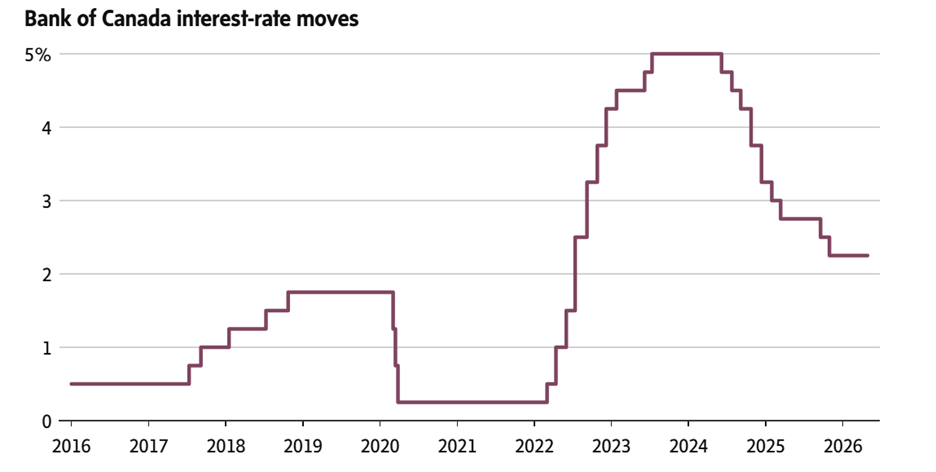
Tiff Macklem said the Bank opted to “look through” the near-term energy price shock. However, he noted that the path of monetary policy will depend heavily on how long oil prices stay elevated, which in turn hinges on the outcome of peace negotiations between the United States and Iran.
“Our baseline outlook assumes oil prices will ease and that U.S. tariffs remain at current levels. If that scenario plays out, a policy rate near where it is today would be appropriate,” Mr. Macklem said during a press conference following the rate decision.
Under this outlook, the Bank could still make adjustments, but any moves “are likely to be modest,” he added, offering unusually direct guidance on the policy path.
At the same time, the Bank is weighing a scenario in which oil prices stay high and begin feeding into a broader range of consumer prices, turning into more widespread inflation.
“If that occurs, monetary policy will have more to do and there could be a need for consecutive increases in the policy rate,” Mr. Macklem cautioned.
The energy price shock has pushed up gasoline prices in Canada and raised headline inflation in March to 2.4 per cent from 1.8 per cent the previous month. The bank expects headline inflation to increase to about 3 per cent in April.
Oil prices aren’t the only source of uncertainty for the Canadian economy and for monetary policy. Mr. Macklem also highlighted the six-year review of the United States-Mexico-Canada trade agreement, which is scheduled to happen on July 1.
Officials from all three countries have said they expect negotiations to continue past the summer deadline, and the future of the trilateral agreement remains uncertain.
“If the United States imposes significant new trade restrictions on Canada, we may need to cut the policy rate further to support economic growth,” Mr. Macklem said.
The two-sided uncertainty is unfolding against the backdrop of a sluggish Canadian economy that’s been battered by U.S. tariffs but supported by resilient consumers and increased government spending at both the provincial and federal level.
The bank’s baseline forecast, published in its quarterly Monetary Policy Report (MPR) on Wednesday, sees Canadian gross domestic product growing 1.2 per cent in 2026 and 1.6 per cent in 2027 – slightly higher than the January forecast.